 Deutsch
 Slovenščina
HOW TO CHOOSE THE RIGHT FORESTRY WINCH – Part 5
JOS: Practical Advice and First-hand Experience from the Field
In the previous article, we discussed steel wire ropes and synthetic ropes, as well as their impact on safety, efficiency, and the service life of a forestry winch. This time, we will focus on components that are often overlooked, even though they are subjected to the highest loads on a daily basis – rope end fittings, sliders, and other connecting elements of the timber extraction system. These components form the connection between the rope and the load. If they are not properly selected, correctly sized, or used appropriately, they can significantly affect the service life of the rope, work efficiency, and above all, safety during timber extraction.
STANDARDS ARE THERE FOR A REASON
Before looking at the individual components, it is important to point out that rope end fittings, sliders, and related accessories are covered by SIST EN 17822:2023, a standard that should always be taken into account when selecting and using this equipment.
These components are directly involved in transmitting high loads, leaving no room for improvisation.
THE ROPE END FITTING IS ONE OF THE MOST HIGHLY LOADED PARTS OF THE SYSTEM
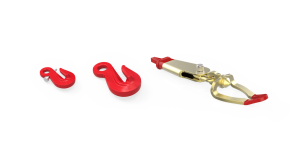
The rope end fitting is one of the most heavily loaded components of the entire forestry winching system. In practice, several types are commonly used:
- parallel hooks,
- sliding hooks,
- rope end fittings with chain locks,
- wedge socket end fittings,
- various designs for synthetic ropes.
Unfortunately, it is still possible to see knots tied at the end of the rope in the field. Although the reason is usually practical—the operator has no better solution available—this practice does not comply with current standards and is not recommended. Likewise, the days of using conventional wire rope clips on forestry winches are largely behind us.
WHICH ROPE END FITTING SHOULD YOU CHOOSE?
The most common choice is a parallel hook, typically in sizes P7–8, P10, or P13, depending on the rope diameter and the chains being used.

Sliding hooks are particularly popular in Germany, while wedge socket end fittings are also a common choice due to their practicality, although they are somewhat heavier.

Regardless of the design, the rope end fitting must always be correctly rated for the pulling force of the winch. With conventional hooks, the rope is typically secured using a compressed aluminium ferrule, whereas wedge socket end fittings achieve the required holding capacity through friction between the rope and the wedge.
SPECIAL FEATURES OF WEDGE SOCKET END FITTINGS
There is one important characteristic worth mentioning when it comes to wedge socket end fittings. If the fitting is equipped with a swivel chain lock or a swivel hook, and the operator uses only this attachment method most of the time, the rope may begin to untwist under load. This can shorten the rope’s service life. It is a detail that users often overlook, yet it can have a significant impact on long-term maintenance costs.
SWIVEL OR FIXED SLIDERS?
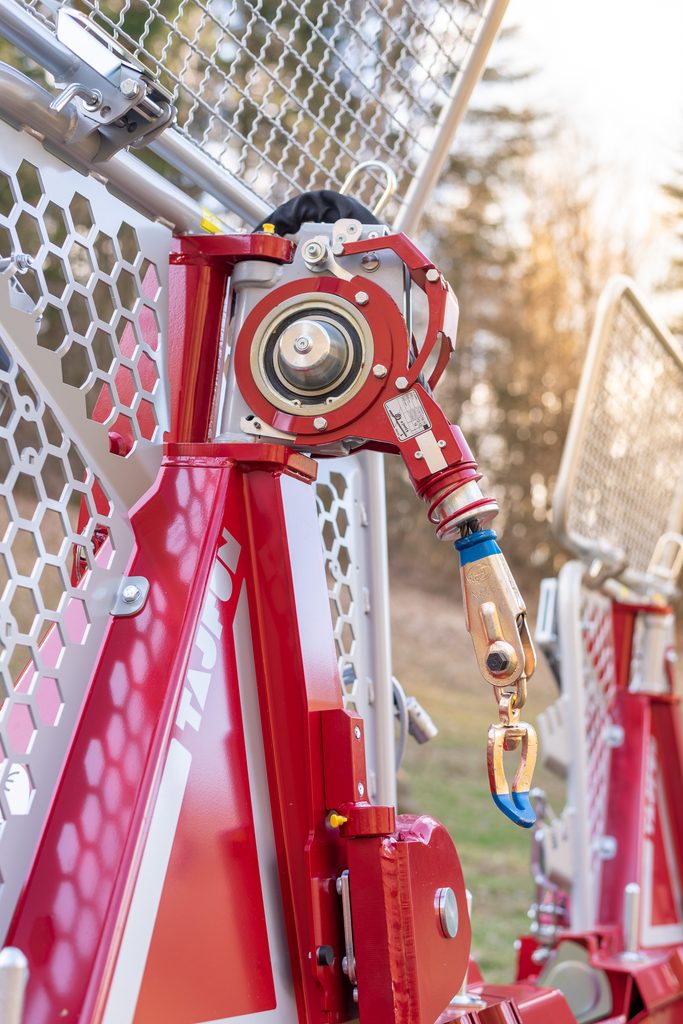
Sliders are generally divided into two categories:
- swivel sliders,
- fixed sliders.
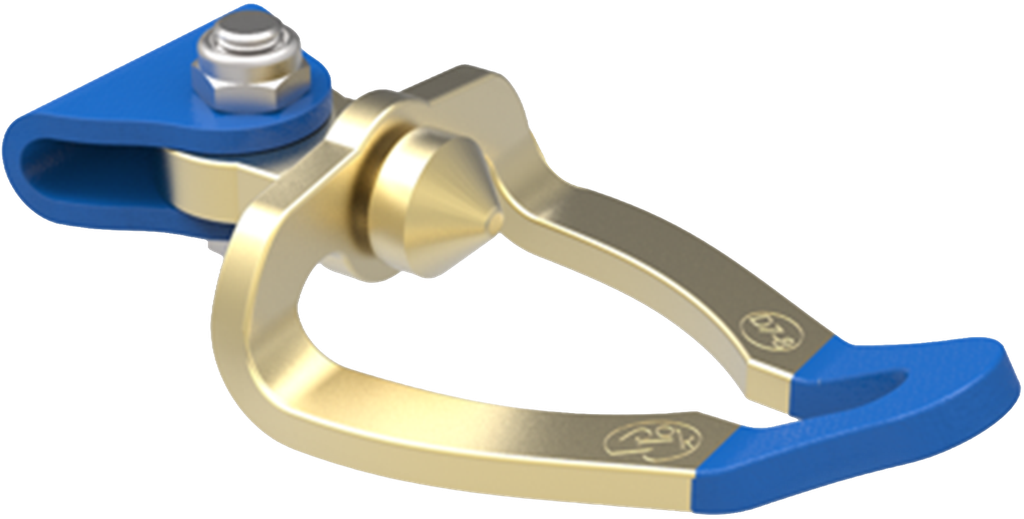
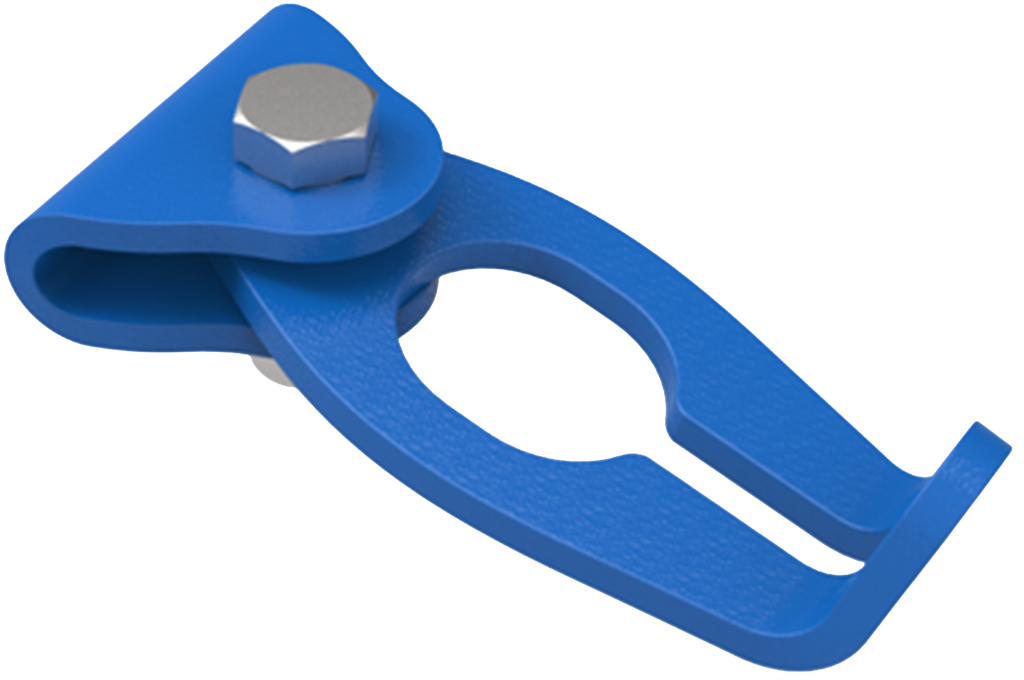
Personally, I do not recommend fixed sliders. The reason is supported by a study conducted several years ago by the Postojna Secondary Forestry and Woodworking School, which produced some interesting findings. When skidding timber using multiple sliders and chains, swivel sliders aligned themselves correctly in approximately 98% of cases, whereas fixed sliders did so in only about 50% of cases. That makes a significant difference in everyday work.
WHY IS THE CORRECT SLIDER POSITION SO IMPORTANT?
When a slider is not correctly aligned, the rope begins to slide through it at an incorrect angle relative to the pulling direction.
The consequences are:
- increased friction,
- faster rope wear,
- damage to individual wires,
- shorter rope service life.
My own field experience confirms the results of this study. For this reason, I always recommend using swivel sliders.
LUBRICATION IS IMPORTANT HERE AS WELL
If you remember the previous article about ropes, we concluded that regular lubrication is essential for reducing friction between individual wires and protecting the rope against corrosion.
The same applies to the movement of sliders along the rope. Sliders move much more smoothly on a properly lubricated rope than on a dry one, making regular maintenance beneficial from this perspective as well.
WHAT ABOUT SYNTHETIC ROPES?
Rope end fittings for synthetic ropes deserve special attention.
From experience, a metal pin combined with a thicker plastic washer between the pin and the slider has proven to be a very effective solution. Because synthetic ropes differ considerably from steel wire ropes in their properties, they also require a somewhat different approach when selecting compatible accessories.
Price also remains an important factor. Although they are considerably more affordable today than they were twenty years ago, they are still approximately three times more expensive than comparable steel wire ropes.
SPECIAL FEATURES OF SLIDERS FOR SYNTHETIC ROPES
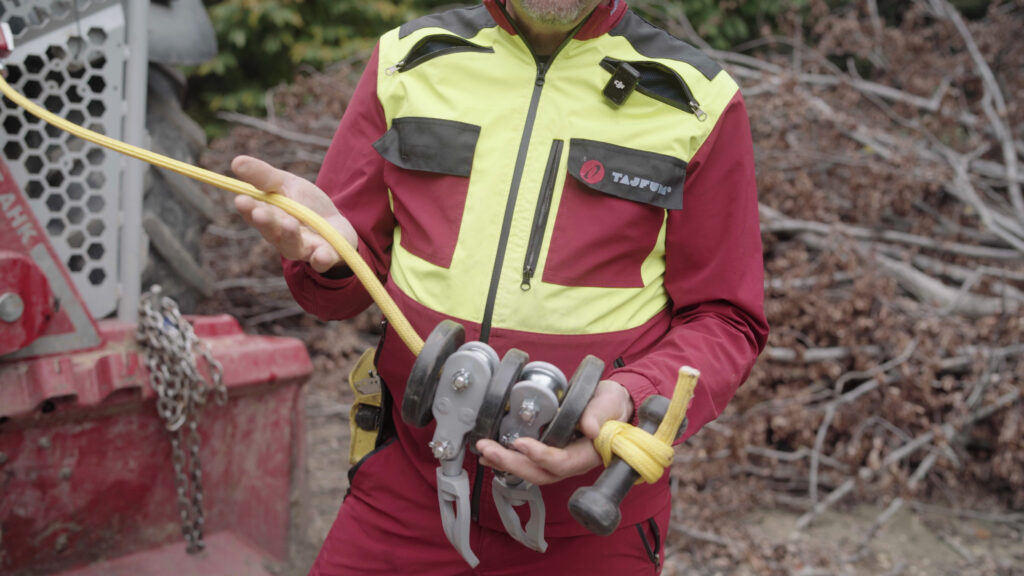
Sliders designed for synthetic ropes are usually asymmetrical. For this reason, the installation direction on the rope is very important. Their design allows the rope to bend as little as possible while passing through the slider, reducing fibre wear and extending the rope’s service life. There are also special slider designs that incorporate one or even two sheaves. In these cases, the rope does not slide through the slider; instead, the sheave rolls along the rope.
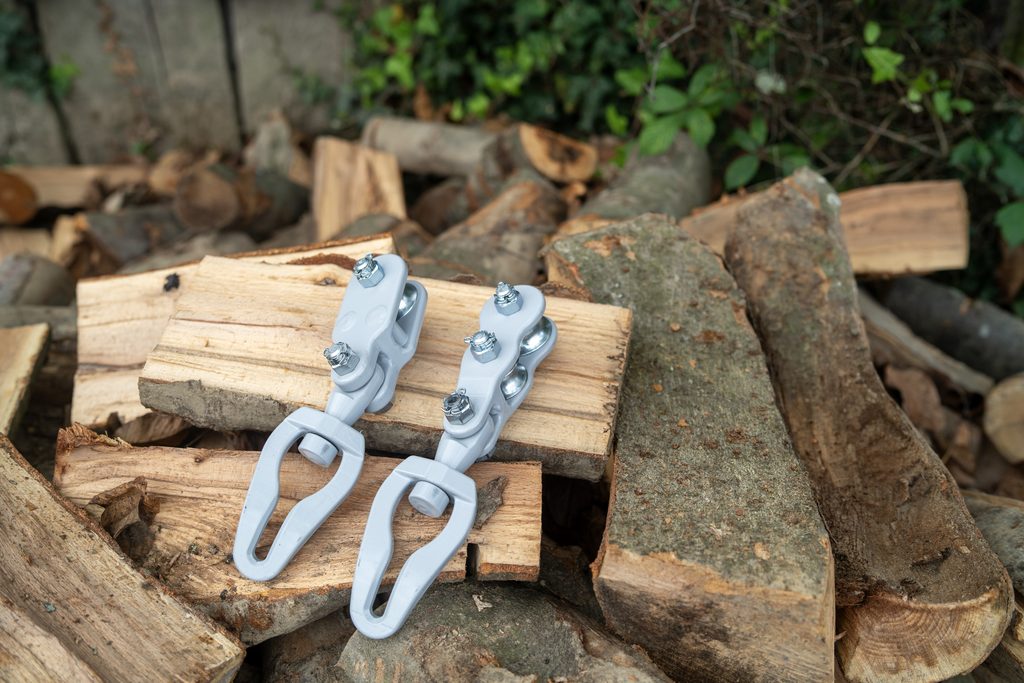
The advantages are obvious:
- minimal rope wear,
- less heat generation,
- reduced friction,
- longer service life of the entire system.
A MISTAKE I SEE FAR TOO OFTEN IN THE FIELD
The purpose of this article is not to teach operators how to use a winch, but one mistake is so common that it deserves special attention. During timber extraction, the load must also be attached to the first slider, the one closest to the winch. If this first slider is allowed to move freely along the rope, especially when using a snatch block, it can be pulled into the pulley.
When this happens, it may:
- become jammed,
- damage the rope,
- cut the rope,
- damage the sheave of the snatch block.
The consequences can be costly and, more importantly, create an additional safety risk.
DAMAGED COMPONENTS SHOULD NOT BE REPAIRED
Rope end fittings, sliders, forestry chains, and wire rope chokers perform a highly demanding task. The rule is simple:
- Use them until they become damaged.
- Once significant damage occurs, replace the component.
- Do not attempt to repair it by welding, grinding, or any other improvised method.
Such repairs create weak points that can fail under load, resulting in:
- equipment damage,
- system failure,
- hazardous situations for the operator and anyone nearby.
SMALL COMPONENTS THAT DO A BIG JOB
Rope end fittings and sliders may be among the smallest components of a timber extraction system, but they play an exceptionally important role.
Properly selected and undamaged components:
- extend the service life of the rope,
- reduce equipment wear,
- improve work efficiency,
- increase safety during timber extraction.
That is why they deserve just as much attention as the winch, the rope, or the tractor.
In the next article, we will focus on pulleys and rope redirection systems, as the proper use of these components can significantly improve timber extraction efficiency while reducing the loads placed on the winch, the rope, and the tractor.